
Wednesday, November 14, 2012
Gingerbread Smoothie !
Here is a great new Healthy Smoothie ! Just in time for the holidays ! Enjoy =)


Sunday, October 28, 2012
Pumpkin Protein Power Shake !
Pumpkin Protein Power Shake
It’s low-calorie, low-carb & high-protein!
Here’s what you’ll need:
1 scoop of vanilla whey protein (Roughly 25g)
7.5 oz. of canned pumpkin (Half of a typical 15 oz. can)
8 oz. (1 cup) of unsweetened non-dairy almond milk (Reduce to ¾ of a cup for more thickness)
1 tsp of cinnamon
1 tsp of nutmeg
1/2 tsp of vanilla extract
Low calorie sweetener (Optional)
1/2 cup of ice
Blend all of the ingredients until you are satisfied with the texture.
This shake turns an ordinary protein shake into a nutritiously fortified monster that has a great source of minerals like iron, magnesium, potassium and calcium. It’s also loaded with a ton of beta-carotene, a precursor for Vitamin A (hence, the orange color of pumpkin), plus vitamin D & E!
Drink this for post-workout recovery or as a midday snack!
The nutrition breakdown is as follows: (Depending on the protein and milk you use, these numbers can vary slightly)
Calories: 250
Protein: 28 g
Carbs: 23 g
Fat: 4g
Enjoy and Happy Halloween!!
Monday, October 8, 2012
Lettuce Wraps with Chicken, Wild Rice and Sugar Snap Peas
Lettuce Wraps with Chicken, Wild Rice and Sugar Snap Peas

Introduction
Slow Cooker Summer Meal Slow Cooker Summer Meal
Number of Servings: 8
Ingredients
- 1 1/2 cups dry wild rice mix
2 3/4 cups vegetable broth
1 lb chicken breast, cut into 1" pieces
1 shallot, finely chopped
1 medium carrot, finely chopped
1 celery rib, finely chopped
8 oz sugar snap peas, trimmed and halved
2 tbsp raspberry vinegar
1/2 cup toasted walnuts, chopped
1/4 cup parsley, chopped
1/2 tsp sea salt
1/4 tsp black pepper
1 head Boston Bibb lettuce
Directions
Rinse and drain rice. Place rice in slow cooker and add broth, chicken, shallot, carrot and celery. Cover and cook on low for about 5 hours or until rice kernels are open but not mushy. Stir in sugar snap peas, vinegar, walnuts, parsley, salt and pepper. Meanwhile, remove 12 small bowl-shaped leaves from the head of lettuce; rinse and pat dry. Spoon about 1/2 cu of the rice mixture into each lettuce cup and serve.
Serving Size: Makes 8 1/2 - cup servings
Number of Servings: 8
Serving Size: Makes 8 1/2 - cup servings
Number of Servings: 8
No Bake Protein Bars !
No-Bake Protein Bars
Ready in 40 minutes • Makes 6 servings
 Optional ingredients:
Nutrients per serving:
Calories: 310, Total Fats: 13 g, Saturated Fat: 2 g, Trans Fat: 0 g, Cholesterol: 25 mg, Sodium: 30 mg, Total Carbohydrates: 28 g, Dietary Fiber: 5 g, Sugars: 5 g, Protein: 22 g, Iron: 2
Ready in 40 minutes • Makes 6 servings
- 2 cups quick cook oats
- 1/2 cup natural peanut butter OR Almond Butter (which is what I use!)
- 4 scoops vanilla protein powder
- 1 tbsp ground flaxseed
- 1/2 cup water
- Line a loaf dish with parchment paper.
- Using clean hands, kneed all ingredients in a large prep bowl.
- Spread dough into dish or pan, pressing down to flatten. Use a spatula smooth out the surface. Freeze for 30 minutes. Cut into six bars. Serve and refrigerate the rest.
Optional ingredients:- 1 tsp cocoa powder (add it in the mix)
- Raw Almonds and or Sunflower seeds (unsalted)
- dried fruit
- raw maple syrup or honey (drizzle on top of pressed dough you put it in the freezer)
Nutrients per serving:
Calories: 310, Total Fats: 13 g, Saturated Fat: 2 g, Trans Fat: 0 g, Cholesterol: 25 mg, Sodium: 30 mg, Total Carbohydrates: 28 g, Dietary Fiber: 5 g, Sugars: 5 g, Protein: 22 g, Iron: 2
Sunday, October 7, 2012
Green Detox Smoothie - Recipe !

Life can be toxic. From contaminants in food and water to noxious chemicals in cleaning and hygiene products, toxins abound. However, you don’t need cleansing products or liquid fasts to restore your health. And I am VERY MUCH against them ! They do more harm then good ! Fresh, whole, ripe fruit and vegetables as well as an active, low-stress lifestyle facilitates detox and cleansing more than any product can!
Leafy Greens are rich in chlorophyll, a plant compound in all green vegetables that is believed to purify the blood and cleanse the body. When you combine the purifying power of greens with the cleansing power of fruit in a green smoothie, you’ve got a natural detox shake that will cleanse and nourish you better than any high-priced detox system on the market.
Ingredients:
1 scoop vanilla protein powder – optional 1/2 cup of Liquid Egg Whites
1 cup raw apple, chopped
1/2 cup of Orange Juice, Coconut Water OR Almond Milk
1 tsp of ground flaxseed – optional
1/2 cup of Spinach raw –stems removed
1/2 cup of broccoli – stems removed
2 tblsp of Greek Yogurt
1/2 cup cold water
3 large ice cubes 3-4 chunks of Frzn Mango
How to Prepare:
(This one is easy!)
1. Put ALL ingredients in a blender and blend/whip (high speed) until all ice is crushed and your smoothie is, well….smooth!).
2. Pour in a large glass, and as always…Enjoy!!…or else
CA =)
Saturday, October 6, 2012
Protein Primers ! CA answers your Questions!
I find that most people do NOT get enough protein in their diets. Turns out it is because they simply don't KNOW how much protein they should actually be consuming ! If you are an active adult and I am also going to assume that if you are ready this blog then you are TRAINING hard to keep fit, then read on ! This should assist with helping you naviate the confusion as to just how much and what type of protein you require !
 1. Eat 1 gram of protein per pound of bodyweight per dayThe protein recommendation set by the Food and Nutrition Board (the authority of the Institute of Medicine that sets the nutrition recommendations for Americans) for the general population is a measly 0.4 gram of protein per pound of BODYWEIGHT per day for males and females. For a 145-pound woman, that's less than 60 grams of protein per day, or about an 8-ounce chicken breast. That's barely enough to fill you up, never mind help you stay strong and recuperate from training. Thankfully, research shows that athletes, particularly strength athletes (which you are - I hope! ), require close to 1 gram of protein per pound of bodyweight per day. That means if you weigh 145 pounds, you need a minimum of 145 grams of protein each day.Do this: Eat at least 1 gram of protein per pound of bodyweight and up to 1.5 grams per pound per day if you're dieting and dropping carbs. Choose from lean protein sources such as chicken breast, turkey breast, eggs, lean beef, low-fat dairy and fish, as well as whey, soy and casein protein powders. Casein is a slow acting protein powder that you can mix in water before bed and it will help supply your body with protein during the evening while you sleep !) 2. Keep your eye on the ball (the ball, of course, being protein)
If you want to be lean, you must avoid eating too much food. Easier said than done, right? It doesn't have to be, because research shows that eating protein can significantly decrease hunger more than eating carbs or fat. Do this: Keep each meal focused on protein to help symie hunger all day.
In fact, start your day off right by eating breakfast, when the egg, a bodybuilding, staple—does more than just supply an excellent source of protein. One study from St. Louis University (Missouri) found that women who ate eggs, toast and jelly for breakfast reported feeling fuller and ate almost 300 fewer calories the rest of the day than when they ate a bagel and cream cheese for breakfast. I would ditch the jelly though !LOL
3. Eat 20-30 grams of protein at every mealtime
Protein also helps you get lean by boosting your metabolic rate, which ultimately leads to burning more fat. Research shows that a high-protein meal raises your metabolic rate by 20%—30%, whereas a high-carb meal may raise it by only 5%—10% and a high-fat meal by 3% or less. This means high-protein diets can keep your metabolism revved up after meals, helping you burn more of the calories and fat you just ate. Protein also helps you burn more fat by slowing the digestion of carbohydrate. A study from the University of Toronto discovered that eating protein with a high-carb meal slowed the digestion of those carbs better than fat. In other words, eating protein and carbs together releases those carbs as glucose into the bloodstream at a slow and steady pace, which in turn keeps insulin levels low and steady. This is important because when carbs are digested rapidly, it promotes large spikes in insulin, which means more fat is stored as bodyfat and less bodyfat is burned as fuel.
Do this: Eat about 20—40 grams of protein with every meal, especially those that are a little carb-heavy.
4. Down protein pre-workout...
One of the most critical times to ingest some protein is right before workouts. Whey protein powder mixed in water is always a good preworkout choice because of the rapid digestion of whey and excellent concentration of branched-chain amino acids. This allows these important aminos to get into your system where they can be used during the workout to prevent muscle breakdown and enhance recovery and growth.
There's another reason to go with whey before workouts — it contains peptides (short protein fragments) that enhance blood-vessel dilation, which allows for greater blood flow to exercising muscles. This promotes the delivery of nutrients (such as amino acids and glucose) and oxygen to muscles during exercise, which is critical for energy during the workout and for recovery afterward. This enhanced blood-vessel dilation may also better maintain your blood pressure as you age and can reduce the risk of cardiovascular disease.
 Do this: Mix 20 grams of whey protein in water and drink within 30 minutes of workouts in addition to 20—30 grams of slow-digesting carbs (1 cup cooked oatmeal, a medium apple, one slice of whole-wheat bread with 1 tablespoon low-sugar preserves).
5. ... And postworkout too!
***See my earlier blog on Which Protein powder is best for you ! ****
Drinking another protein shake immediately after workouts has been proven to be the best way to boost muscle synthesis at the most critical time of your training day, optimizing the muscle-building and growth process. Conversely, if you don't use the postworkout window to feed your muscles properly, you'll actually break down fibers rather than rebuild them, which isn't good for the metabolism.
Research also shows that consuming a protein shake at this time decreases delayed-onset muscle soreness (DOMS) the discomfort you experience a day or so after a tough workout. A Georgia Institute of Technology (Atlanta) study found that subjects who ingested a protein and carb-drink after a workout designed to cause muscle damage experienced more than 50% less muscle soreness than those who took a carb-only drink.
Do this: Drink a 40-gram protein shake that contains whey protein immediately after workouts along with 30—40 grams of fast-digesting carbs such as a small plain bagel or a 20-ounce sports drink. For this postworkout shake, consider mixing 20 grams each of whey and soy protein powder. Soy protein not only has numerous health benefits such as reduced risk of cardiovascular diseases, estrogen-related problems (breast cancer, hot-flashes) and certain cancers but it has also been found to significantly enhance muscle recovery better than other protein sources.
6. Bump up protein slightly at breakfast - EAT YOUR BREAKFAST !!!!
Research from the Swiss Federal Institute of Technology (Zurich) discovered that a breakfast that's higher in protein than carbs, or at least equal in protein and carbs, allowed students to perform significantly better on various cognitive and memory tests that were designed to mimic typical work tasks, compared to when they ate a breakfast that was higher in carbs than protein.
Do this: For breakfast, eat about 30—40 grams of protein such as eggs along with 20—30 grams of slow-digesting carbs from sources such as oatmeal or whole-wheat toast.
You are working hard and training so FEED your muscles to allow them to develop and work harder !
"Peace, Love and Fitness"
Most mainstream dietitians would have you believe that too much protein can be dangerous to your health. Yet at Hers we embrace protein and make it the cornerstone of every meal. No, protein won't kill you, nor will it turn you into a she-hulk with 18-inch arms ! (That's a WHOLE other post !) =;)
If you want to be lean, you must avoid eating too much food. Easier said than done, right? It doesn't have to be, because research shows that eating protein can significantly decrease hunger more than eating carbs or fat. Do this: Keep each meal focused on protein to help symie hunger all day.
In fact, start your day off right by eating breakfast, when the egg, a bodybuilding, staple—does more than just supply an excellent source of protein. One study from St. Louis University (Missouri) found that women who ate eggs, toast and jelly for breakfast reported feeling fuller and ate almost 300 fewer calories the rest of the day than when they ate a bagel and cream cheese for breakfast. I would ditch the jelly though !LOL
3. Eat 20-30 grams of protein at every mealtime
Protein also helps you get lean by boosting your metabolic rate, which ultimately leads to burning more fat. Research shows that a high-protein meal raises your metabolic rate by 20%—30%, whereas a high-carb meal may raise it by only 5%—10% and a high-fat meal by 3% or less. This means high-protein diets can keep your metabolism revved up after meals, helping you burn more of the calories and fat you just ate. Protein also helps you burn more fat by slowing the digestion of carbohydrate. A study from the University of Toronto discovered that eating protein with a high-carb meal slowed the digestion of those carbs better than fat. In other words, eating protein and carbs together releases those carbs as glucose into the bloodstream at a slow and steady pace, which in turn keeps insulin levels low and steady. This is important because when carbs are digested rapidly, it promotes large spikes in insulin, which means more fat is stored as bodyfat and less bodyfat is burned as fuel.
Do this: Eat about 20—40 grams of protein with every meal, especially those that are a little carb-heavy.
4. Down protein pre-workout...
One of the most critical times to ingest some protein is right before workouts. Whey protein powder mixed in water is always a good preworkout choice because of the rapid digestion of whey and excellent concentration of branched-chain amino acids. This allows these important aminos to get into your system where they can be used during the workout to prevent muscle breakdown and enhance recovery and growth.
There's another reason to go with whey before workouts — it contains peptides (short protein fragments) that enhance blood-vessel dilation, which allows for greater blood flow to exercising muscles. This promotes the delivery of nutrients (such as amino acids and glucose) and oxygen to muscles during exercise, which is critical for energy during the workout and for recovery afterward. This enhanced blood-vessel dilation may also better maintain your blood pressure as you age and can reduce the risk of cardiovascular disease.
Do this: Mix 20 grams of whey protein in water and drink within 30 minutes of workouts in addition to 20—30 grams of slow-digesting carbs (1 cup cooked oatmeal, a medium apple, one slice of whole-wheat bread with 1 tablespoon low-sugar preserves).5. ... And postworkout too!
***See my earlier blog on Which Protein powder is best for you ! ****
Drinking another protein shake immediately after workouts has been proven to be the best way to boost muscle synthesis at the most critical time of your training day, optimizing the muscle-building and growth process. Conversely, if you don't use the postworkout window to feed your muscles properly, you'll actually break down fibers rather than rebuild them, which isn't good for the metabolism.
Research also shows that consuming a protein shake at this time decreases delayed-onset muscle soreness (DOMS) the discomfort you experience a day or so after a tough workout. A Georgia Institute of Technology (Atlanta) study found that subjects who ingested a protein and carb-drink after a workout designed to cause muscle damage experienced more than 50% less muscle soreness than those who took a carb-only drink.
Do this: Drink a 40-gram protein shake that contains whey protein immediately after workouts along with 30—40 grams of fast-digesting carbs such as a small plain bagel or a 20-ounce sports drink. For this postworkout shake, consider mixing 20 grams each of whey and soy protein powder. Soy protein not only has numerous health benefits such as reduced risk of cardiovascular diseases, estrogen-related problems (breast cancer, hot-flashes) and certain cancers but it has also been found to significantly enhance muscle recovery better than other protein sources.
6. Bump up protein slightly at breakfast - EAT YOUR BREAKFAST !!!!
Research from the Swiss Federal Institute of Technology (Zurich) discovered that a breakfast that's higher in protein than carbs, or at least equal in protein and carbs, allowed students to perform significantly better on various cognitive and memory tests that were designed to mimic typical work tasks, compared to when they ate a breakfast that was higher in carbs than protein.
Do this: For breakfast, eat about 30—40 grams of protein such as eggs along with 20—30 grams of slow-digesting carbs from sources such as oatmeal or whole-wheat toast.
You are working hard and training so FEED your muscles to allow them to develop and work harder !
"Peace, Love and Fitness"
Wednesday, September 5, 2012
Benefits of Middle-Age Fitness !

Canadians are living longer, with our average life expectancy now surpassing 78 years, up from less than 74 years in 1980. (Explains all the Hip and Knee Replacements at younger ages!) But we are not necessarily living better. The incidence of a variety of chronic diseases, like diabetes and heart disease, has also been growing dramatically, particularly among people who are not yet elderly.
The convergence of those two developments has led to what some researchers have identified as a “lengthening of morbidity.” That means we are spending more years living with chronic disease and ill health — not the outcome that most of us would hope for from a prolonged life span.
But a notable new study published last week in Archives of Internal Medicine suggests that a little advance planning could change that prospect. Being or becoming fit in middle age, the study found, even if you haven’t previously bothered with exercise, appears to reshape the landscape of aging.
For the study, researchers at the University of Texas Southwestern Medical Center and the Cooper Institute in Dallas gathered medical records for 18,670 middle-aged men and women who’d visited the Cooper Clinic (the medical arm of the Cooper Institute) for a checkup beginning in 1970.
The 18,670 men and women, with an average age of 49, were healthy and free of chronic diseases at their first checkup, when they all took a treadmill test to determine their aerobic fitness. Based on the results of this initial fitness test, the researchers divided the group into five fitness categories, with the bulk of the people residing, like most Americans, in the least-fit section.
Then, in a first-of-its-kind data comparison, the researchers checked the same individuals’ Medicare claim records (with permission) from 1999 through 2009, by which time most of the participants were in their 70s or 80s.
What they found was that those adults who had been the least fit at the time of their middle-age checkup also were the most likely to have developed any of eight serious or chronic conditions early in the aging process. These include heart disease, diabetes, Alzheimer’s, and colon or lung cancer.
The adults who’d been the most fit in their 40s and 50s often developed many of the same conditions, but notably their maladies appeared significantly later in life than for the less fit. Typically, the most aerobically fit people lived with chronic illnesses in the final five years of their lives, instead of the final 10, 15 or even 20 years.
While this finding might not seem, on its face, altogether positive — the fit and the unfit alike generally became infirm at some point, the Medicare records showed — the results should be viewed as encouraging, says Dr. Benjamin Willis, a staff epidemiologist at the Cooper Institute who led the study. “I’m 58, and for me, the results were a big relief,” Dr. Willis said.
That’s because, he points out, the results show, in essence, that being physically fit “compresses the time” that someone is likely to spend being debilitated during old age, leaving the earlier post-retirement years free of serious illness and, at least potentially, imbued with a finer quality of life.
Interestingly, the effects of fitness in this study statistically were greater in terms of delaying illness than in prolonging life. While those in the fittest group did tend to live longer than the least fit, perhaps more important was the fact that they were even more likely to live well during more of their older years.
Of course, aging is a complicated process and extremely individualized, with the onset or absence of illness representing only one element in quality of life after age 65 or so. But it is a big element, says Dr. Jarett Berry, an assistant professor of internal medicine at U.T. Southwestern and an author of the study. “And since it appears to be associated with midlife fitness, it is amenable to change,” he continues.
While aerobic fitness is partly determined by genetics, and to that extent, the luck of the universe, much of a person’s fitness, especially by middle age, depends on physical activity, Dr. Berry says.
So, exercising during midlife, especially if you haven’t been, can pay enormous later-life benefits, he says. “Our study suggests that someone in midlife who moves from the least fit to the second-to-the-least-fit category of fitness gets more benefit,” in terms of staving off chronic diseases, than someone who moves to the highest fitness grouping from the second-highest.
And moving out of that least-fit category requires, he says, “only a small dose of exercise,” like 20 or 30 minutes of walking on most days of the week.
“You don’t have to become an athlete,” says Dr. Willis, who himself has little time for exercise but tries to fit in a daily walk. “Just getting up off the couch is key.”
Friday, August 31, 2012

Wednesday, August 22, 2012
Healthy Choices - Be Aware !
Last week, one of my clients walked into my gym with a giant yogurt parfait.
As the client proudly listed the ingredients of what they believed was a healthy breakfast, I calculated how many hundreds of calories and grams of sugar and fat that this far-from-healthy meal contained – and how much extra cardio I was going to make them do as a result – and broke the news. This parfait is a CALORIE BOMB!
Between the high-fat yogurt, sugar and oil-laden granola, my client was shocked to find out they had just consumed close to 1000 calories, most of which were from unhealthy fats and sugars.
This client is not the first person I've met who has been misled to believe that certain foods are healthy, when in fact, those foods are far from it.
I've compiled a list of 10 foods you may as well strap to your thighs – because that's where they'll be going otherwise!
• Granola
Though typically paired with words like "organic," "harvest," or "natural," almost all granolas are fattening. One tiny serving can have 420 calories, 10 grams of fat and 26 grams of sugar.
A better choice:
Muesli is made without added oils and is usually sweetened with berries and fruit, not sugar. Try soaking mueseli in skim or almond milk overnight.
•Pretzels
People are often lured in by the "fat free" aspect of pretzels. But a 3-oz. serving of pretzels can contain 320 calories and 1720 mg. of sodium – and little else.
A better choice:
Try air-popped popcorn. It has a fraction of the calories, tons of fiber and hardly any sodium.
•Couscous
Couscous is not a grain. I repeat, it is not a grain. Much like its brother spaghetti and its sister ravioli, couscous is pasta.
A better choice:
Bulgur and quinoa contain exponentially more fiber, protein and flavor!
•Tuna salad
Most of us don't eat enough fish, so I'm not going to hate on any fish in particular. Most tuna salads however, are not very healthy. Usually smothered in mayonnaise and made from albacore tuna, 4 oz. of this classic sandwich filler is filled with fat (10 grams), calories (212), and it rates sky-high in mercury. So, it's not going to get you any into your skinny jeans any quicker.
A better choice:
Try using light (not white) tuna, which is lower in mercury. Combine with herbs, lemon juice and yogurt to create a tasty, healthier version of a tuna salad!
•Brown sugar
For some reason, many people perceive brown sugar as being healthier than white sugar. Unfortunately, it's not fiber or any other useful nutrient that gives brown sugar its color; it's molasses, which doesn't offer any nutritional benefits. Consequently, when it comes to calories and health benefits, brown and white sugar are equals.
A better choice:
Try experimenting with agave, honey and maple syrup, all of which are a little sweeter, therefore you don't need to use as much.
•Canned fruit (and other canned foods)
I used to love eating canned fruit. Once I learned how to read a food label, I learned that canned fruit is arguably the least healthy form of fruit consumption. Lacking most of the nutrients that make fruit so healthy, canned fruit is loaded with added sugar and void of fiber. A medium peach has 8 grams of sugar, while one serving of canned peaches has more than 24 grams of sugar – three times as much!
A better choice:
Be smart about choosing fruit. Opt for fresh fruit with edible skin (apples, pears, peaches) or seeds (strawberries, raspberries, kiwis) or citrus (oranges, grapefruits), or certain dried fruits. Choose dried fruits with skin when possible and don't eat too many, as they can be pretty calorie dense.
•Muffins
Pick up the Nutrition Guide at Tim Hortons. One of the highest caloric / fat content items on the list is the Chocolate Muffin !!! When you actually break down a muffin into its ingredients (sugar, flour, butter/margarine, etc.), you realize that if it came in a slightly different shape with some frosting, it wouldn't be called a muffin. It would be called "cake!" A CUPCAKE !
Most of the bran muffins I've seen exceed 400 calories and ooze with over 20 grams of fat plus lots of sugar and other additives. They may also contain trans fats – those nasty fats that raise your bad LDL cholesterol and lower the good cholesterol (HDL). Bran muffins are also often served with sides of butter only adding insult to injury.
A better choice:
Healthy Muffin recipe ! That are not only delicious but actually a healthy treat. Try making a batter of non-fat greek yogurt, egg whites, natural peanut butter, dried cranberries/blueberries, and a touch of a sweetener of your choice! Create a texture similar to that of cookie dough, preheat the oven to 350 degrees and dole out on a sprayed pan. Bake for 30 minutes and you have an amazing, fibrous, protein filled treat!
•Reduced-Fat Peanut Butter
First, reduced-fat is not the same as low fat. Ever heard the saying, "Robbing Peter to pay Paul"? Well, most commercial peanut butters are made with the same type of sugar that cake frosting is made with. Reducing the fat makes it even worse because even more sugar is added and they contain less healthy fat.
A better choice:
As with peanuts, choose almonds or all natural organic peanut butter instead. Just remember to pour off half of the top layer of oil.
•Fruit-flavored yogurts
With more than 30 grams of added sugar and 80 calories of fat per serving in many of these yogurt desserts, you may as well be eating a chocolate bar.
A better choice:
Try non-fat greek yogurt and add some fresh berries. Greek yogurt is essentially lactose free and is packed with high quality metabolism boosting protein. Try brands like Chobani, Fage or Oikos.
•Turkey Bacon and Turkey Sausage
I've never seen or heard of a healthy sausage or bacon of any kind. Most are loaded with fat, sodium, and nitrates. Just because they are made from turkey rather than pork doesn't make them any healthier. In fact, there are many versions of pork bacons (i.e., Canadian bacon) that are leaner than turkey bacons. And sausage is usually made with the lowest quality "leftovers" from butchering. Yuck !
A better choice:
Try smoked salmon, veggie bacon, and bresaola. They all have incredible flavor and are far healthier than traditional breakfast meats.
As the client proudly listed the ingredients of what they believed was a healthy breakfast, I calculated how many hundreds of calories and grams of sugar and fat that this far-from-healthy meal contained – and how much extra cardio I was going to make them do as a result – and broke the news. This parfait is a CALORIE BOMB!
Between the high-fat yogurt, sugar and oil-laden granola, my client was shocked to find out they had just consumed close to 1000 calories, most of which were from unhealthy fats and sugars.
This client is not the first person I've met who has been misled to believe that certain foods are healthy, when in fact, those foods are far from it.
I've compiled a list of 10 foods you may as well strap to your thighs – because that's where they'll be going otherwise!
• Granola
Though typically paired with words like "organic," "harvest," or "natural," almost all granolas are fattening. One tiny serving can have 420 calories, 10 grams of fat and 26 grams of sugar.
A better choice:
Muesli is made without added oils and is usually sweetened with berries and fruit, not sugar. Try soaking mueseli in skim or almond milk overnight.
•Pretzels
People are often lured in by the "fat free" aspect of pretzels. But a 3-oz. serving of pretzels can contain 320 calories and 1720 mg. of sodium – and little else.
A better choice:
Try air-popped popcorn. It has a fraction of the calories, tons of fiber and hardly any sodium.
•Couscous
Couscous is not a grain. I repeat, it is not a grain. Much like its brother spaghetti and its sister ravioli, couscous is pasta.
A better choice:
Bulgur and quinoa contain exponentially more fiber, protein and flavor!
•Tuna salad
Most of us don't eat enough fish, so I'm not going to hate on any fish in particular. Most tuna salads however, are not very healthy. Usually smothered in mayonnaise and made from albacore tuna, 4 oz. of this classic sandwich filler is filled with fat (10 grams), calories (212), and it rates sky-high in mercury. So, it's not going to get you any into your skinny jeans any quicker.
A better choice:
Try using light (not white) tuna, which is lower in mercury. Combine with herbs, lemon juice and yogurt to create a tasty, healthier version of a tuna salad!
•Brown sugar
For some reason, many people perceive brown sugar as being healthier than white sugar. Unfortunately, it's not fiber or any other useful nutrient that gives brown sugar its color; it's molasses, which doesn't offer any nutritional benefits. Consequently, when it comes to calories and health benefits, brown and white sugar are equals.
A better choice:
Try experimenting with agave, honey and maple syrup, all of which are a little sweeter, therefore you don't need to use as much.
•Canned fruit (and other canned foods)
I used to love eating canned fruit. Once I learned how to read a food label, I learned that canned fruit is arguably the least healthy form of fruit consumption. Lacking most of the nutrients that make fruit so healthy, canned fruit is loaded with added sugar and void of fiber. A medium peach has 8 grams of sugar, while one serving of canned peaches has more than 24 grams of sugar – three times as much!
A better choice:
Be smart about choosing fruit. Opt for fresh fruit with edible skin (apples, pears, peaches) or seeds (strawberries, raspberries, kiwis) or citrus (oranges, grapefruits), or certain dried fruits. Choose dried fruits with skin when possible and don't eat too many, as they can be pretty calorie dense.
•Muffins
Pick up the Nutrition Guide at Tim Hortons. One of the highest caloric / fat content items on the list is the Chocolate Muffin !!! When you actually break down a muffin into its ingredients (sugar, flour, butter/margarine, etc.), you realize that if it came in a slightly different shape with some frosting, it wouldn't be called a muffin. It would be called "cake!" A CUPCAKE !
Most of the bran muffins I've seen exceed 400 calories and ooze with over 20 grams of fat plus lots of sugar and other additives. They may also contain trans fats – those nasty fats that raise your bad LDL cholesterol and lower the good cholesterol (HDL). Bran muffins are also often served with sides of butter only adding insult to injury.
A better choice:
Healthy Muffin recipe ! That are not only delicious but actually a healthy treat. Try making a batter of non-fat greek yogurt, egg whites, natural peanut butter, dried cranberries/blueberries, and a touch of a sweetener of your choice! Create a texture similar to that of cookie dough, preheat the oven to 350 degrees and dole out on a sprayed pan. Bake for 30 minutes and you have an amazing, fibrous, protein filled treat!
•Reduced-Fat Peanut Butter
First, reduced-fat is not the same as low fat. Ever heard the saying, "Robbing Peter to pay Paul"? Well, most commercial peanut butters are made with the same type of sugar that cake frosting is made with. Reducing the fat makes it even worse because even more sugar is added and they contain less healthy fat.
A better choice:
As with peanuts, choose almonds or all natural organic peanut butter instead. Just remember to pour off half of the top layer of oil.
•Fruit-flavored yogurts
With more than 30 grams of added sugar and 80 calories of fat per serving in many of these yogurt desserts, you may as well be eating a chocolate bar.
A better choice:
Try non-fat greek yogurt and add some fresh berries. Greek yogurt is essentially lactose free and is packed with high quality metabolism boosting protein. Try brands like Chobani, Fage or Oikos.
•Turkey Bacon and Turkey Sausage
I've never seen or heard of a healthy sausage or bacon of any kind. Most are loaded with fat, sodium, and nitrates. Just because they are made from turkey rather than pork doesn't make them any healthier. In fact, there are many versions of pork bacons (i.e., Canadian bacon) that are leaner than turkey bacons. And sausage is usually made with the lowest quality "leftovers" from butchering. Yuck !
A better choice:
Try smoked salmon, veggie bacon, and bresaola. They all have incredible flavor and are far healthier than traditional breakfast meats.
Saturday, August 11, 2012
Preventing The Dreaded Weight Loss Plateau

Everyone has experienced it. You're cruising along on your weight loss journey, the scale is consistently going down, you've found your groove and then, BAM! You hit a wall and nothing will budge.
The stories are numerous. Everyone seems to do so well on a diet for the first 3-4 weeks then it "stops working," and they throw in the towel.
More than likely, the diet didn't stop working, their body adapted and caused a plateau.
IT HAPPENS !
Plateaus happen, at least to those who don't plan so they can prevent them!
Our bodies are actually so amazing that they learn to adapt themselves to their environments. While slowing the metabolism down may be helpful if you're trying to survive in the wilderness, it's not so helpful when you've trimmed the calories and are trying to trying to burn that fat and your own body sabotages your plans. Fight back and prevent the plateau, or if you're already hitting that wall, it's time to trick the body and relight your metabolism.
First, shake up the calories and CHEAT! Yes, I said the cheat word! NOW I DO say this with some conditions.....don't go crazy ! Your "cheat meals" should be responsible !
And there are a couple of ways to cheat. Each week, you should plan for a free day to indulge in your cheat meals. This helps you both emotionally and psychologically enjoy foods you love while still sticking to your carb cycling plan the rest of the week. Don't bring home crap and leave it there to tempt you the rest of the week.
Enjoy, then toss out any leftovers or go out to partake of it somewhere else.
If the thought of ingesting a lot of sugar and "sinful" food doesn't appeal to you (congrats if you're at this point!), < ideally you WANT to get here as one of your Goals ! Aim to increase your caloric intake by about 1,000 calories higher than what you normally eat during the week to achieve a similar result on your fun day!
The goal is to do something radically different to throw off your body and what it is expecting to take in on this day.
Secondly, mix up your weekly eating plan with a "slingshot week." While we often can't remember what we did last week, our bodies have a long term memory that's very sharp.
If you've been following a carb cycling plan for three weeks and alternating low carb/high carb with a free day on Sunday, then come week four, guess what?
Your body will be expecting another similar week and will burn calories accordingly. So trick it! Make this week all high carb days (aka slingshot week) to mix it up, then return to your low carb/high carb schedule.
This is so important because if you don't mix it up, you will be setting yourself up for a plateau. Keep in mind you may not lose any pounds during this week (you may even gain slightly) but remember the big picture -- you're psyching out your body to avoid a stall long term.
I don't recommend this for everyone - unless you are already follwing a very religious nutrition program like I do.
Lastly, wake up those workouts. Okay, by now you get the picture that you need to mix things up. That includes your workouts! If you have done the same routine more than six times in a row, it's time to try something new! Everyone will tell you a different time to mix -up / change your workouts but again - IT DEPENDS ON YOUR GOAL ! You MUST have a goal to shoot for ! You can't just "go work out every day" and not have something you wish to acheive by doing so ! There is no magic # - everyone is different.
Mix Up the Cardio ! I cannot STRESS this enough ! YOU MUST DO CARDIO !
Get on the stair stepper if you typically get on the treadmill. Take a yoga class if you normally do circuit. If you are a walker, try bike riding. Try Swimming ! Swimming is a TOTAL body workout !
Check out a gym that offers a free trial and experiment if you've never gone to the gym.
If you use a gym, take a new class or get your ass on a new machine !
As well, if you are already doing some serious working out and not seeing any progress, take a few days off from any workouts.
You're body won't know what to think!
Switching it up will not only help you avoid the dreaded weight loss plateau, but it will also prevent you from getting bored on your transformation journey. When you keep your food plan, eating routine and workouts ever changing, you will be fueling your success!
"Peace, Love and Fitness"
Tuesday, August 7, 2012
Wednesday, July 25, 2012
How to do the Perfect Lateral Raise !
This is always one of the exercises I give to clients to strengthen and tone shoulders. If you want nice toned arms, don't neglect the shoulders. Most people think that nice arms only = nice biceps, but in truth you must work your whole arm - Shoulders, Triceps, Biceps and Forearms for an overall toned appearance and lean look !
Dumbbell lateral raises performed the traditional way don't work the targeted muscle -- the lateral head of the deltoids (or top / rounded part of shoulder)-- as effectively as they could without a little "tweak" in the movement ! I always make sure that this is the way clients perform this and trust me - it makes ALL the difference !
In this first picture you can see the dumbbells are positioned straight and level to the floor on the raise portion of the exercise.

If you REALLY want to get definition in both shoulders AND Triceps, then the "teak" that I am referring to is just as you get to the top of the move, point your thumbs down / or 'lead with your pinkies' - meaning your pinkies should be aimed at ceiling. (see photo below).

A simple repositioning can make a big difference. Bend slightly at the waist, and lead with the pinkies means this will transfer more emphasis onto both your triceps and shoulders and help to isolate both muscle groups.
Try 3 sets of 8 to start with lighter weights (like 5 - 8 lbs). NOTE: it is more important to get your form correct first !!! If you do not have the correct form, then it doesn't matter how many reps you do...you won't achieve the desired results !
Form over Function !
Good Luck !
"Peace, Love, Fitness"
Dumbbell lateral raises performed the traditional way don't work the targeted muscle -- the lateral head of the deltoids (or top / rounded part of shoulder)-- as effectively as they could without a little "tweak" in the movement ! I always make sure that this is the way clients perform this and trust me - it makes ALL the difference !
In this first picture you can see the dumbbells are positioned straight and level to the floor on the raise portion of the exercise.

If you REALLY want to get definition in both shoulders AND Triceps, then the "teak" that I am referring to is just as you get to the top of the move, point your thumbs down / or 'lead with your pinkies' - meaning your pinkies should be aimed at ceiling. (see photo below).

Try 3 sets of 8 to start with lighter weights (like 5 - 8 lbs). NOTE: it is more important to get your form correct first !!! If you do not have the correct form, then it doesn't matter how many reps you do...you won't achieve the desired results !
Form over Function !
Good Luck !
"Peace, Love, Fitness"
Monday, July 9, 2012
Clean up your diet with a few simple tweaks !!
Whether you've tried one too many fad diets, have fallen off the bandwagon, or just want tips for lifetime weight management, read on for my excuse-proof tips to help you flush the fat and stop the dieting merry-go-round.
1. Break that fast.
Think about it. You have been fasting for a good eight to 10 hours since eating dinner and going to sleep. Studies on both adults and children show that breakfast skippers have problems concentrating and a lack of sustainable energy.
You CAN train your body to "be ready" to eat 6 -7 times a day !
You'll be reaching for coffee, sweets, and sugar-laden energy drinks to give your blood sugar an immediate lift, but soon after you'll feel drained again and on the prowl for another sugar hit.
Protein Shakes ! Get on the Protein Wagon !
Solution: Find a protein powder that is dairy-(including whey) and soy-free. I am a huge proponent in morning shakes using non-dairy alternatives like Almond Milk. You can also buy rice, coconut and almost every other alternative in the health food dept. of your grocery store. To make a great anti-oxidant smoothie, simply combine in a blender:
One scoop vanilla protein powder, 8 ounces water or cran-water (1 ounce, 100 percent unsweetened cranberry juice to 7 ounces water), 1 cup fresh or frozen fruit, 1 tablespoon Egg Whites, 1 tablespoon flax or chia seeds, and ice cubes (if you'd like).
Gain Great energy for three to four hours!
2. Eat all the colors of the rainbow.
Include at least two dark, leafy greens (like kale, collards, and romaine lettuce) and brightly pigmented vegetables and fruits (like tomatoes, fresh corn, oranges, and blueberries) to complement your daily intake of protein foods (omega-3 eggs, organic poultry, lean beef, deep sea fish, legumes, and tofu) and healthy fats (olive oil, walnuts, and chia seeds).
3. Don't eat the same foods every day.
Variety is the spice of life, and the more kinds of foods you eat, the greater your chances of taking in all the important nutrients that ward off disease like diabetes, heart disease, and arthritis. Strive for at least 10 different kinds of foods a day instead of just a few.
4. Eat lunch like a king and dinner like a pauper.
Our caloric and metabolic needs peak at midday. Work with your metabolism, not against it.
5. WATER, WATER, WATER ! Use pure water as your number one beverage.
Since water is the most natural and effective diluting agent, it is important that it be used therapeutically for cleansing. Drinking any other liquids, such as coffee, tea (even herbal teas), soft drinks, diet drinks, carbonated water, mineral water, or unsweetened fruit juice, can ALL dehydrate you!. All of these beverages contain some type of substance that must go through a digestive process. This is exactly what you don't want. Here's why you should drink your eight to 12 8-ounce glasses today:
- Drinking water before a meal takes the edge off your appetite.
- Water ensures normal bowel and kidney function to rid the body of waste -- as well as stored fat.
- Drinking water alleviates fluid retention -- only when the body gets plenty of water will it release the stored water.
- Water gets rid of excess salt.
- Water helps plump the skin and prevents dehydration.
- Water helps to prevent the sagging skin condition that often follows weight loss.
- For great taste - add a lemon slice to your water !
6. Try not to go more than four hours without eating.
Keeping blood sugar levels steady translates into more weight loss for you.
7. Snack in the mid-afternoon.
Learn to grab a handful of raw almonds, pumpkin seeds, pistachios, or an ounce of low-fat cheese with a piece of fruit. Feeling creative? Try a sliced apple or nectarine rolled in toasted ground or milled flaxseeds with cinnamon, or celery ribs stuffed with mashed tofu, garlic powder, onion powder, and a dash of cayenne.
8. If you go out to eat, ask the server to remove the bread ASAP.
Instead, order a seafood cocktail or grilled Portobello mushrooms to get you started and take the edge off your hunger. This way you won't be tempted to fill up on carbs. AND don't add Salad Dressing to your salad - only olive oil and balsamic ! Ditch those hidden Calories !
9. Don't desert dessert. BUT keep it healthy ! In other words, don't deprive yourself. A little bit of a natural fruit sorbet or even fresh fruit (fresh pineapple is so good for your digestion) will give your sweet tooth just the satisfaction it needs.
10. Ensure proper dietary intake.
If you eat out frequently, or are prone to skipping meals due to your hectic schedule, then consider a multivitamin to the rescue. A multivitamin is important year-round, but is especially ideal during the summer. When you sweat, your body loses magnesium, the most important mineral for your heart. I recommend a multivitamin that contains 250-500 mg magnesium daily.
If you integrate even two or three of these tips and tricks I bet you'll reap huge benefits. Here's to a slimmer, healthier summer!
It is possible to enjoy a healthy nutirtion plan and be happy !
"Peace, Love and Fitness"
Monday, July 2, 2012
4 Mistakes YOU may be making !!!
Mistake #1 : Cardio on an empty stomach
If there’s no food in your tummy, your body will automatically tap into your fat stores, right? Guess again.
A 2011 report in the Strength and Conditioning Journal determined that regardless of whether or not you eat prior to your workout, your body will burn the same amount of fat. Even more depressing news: they found you’ll be more likely to use your muscle as a fuel source if you don’t nosh prior to sweating. Remember : FUEL your body before and within 30 min. of working out ! Bagel & PB, Greek Yogurt Fruit/Oatmeal Parfait, Egg White Omelette are some great post workout meals to help get you started ! Your body needs carbs - DON'T listen to ill-informed idiots who say "I don't eat carbs" - Dumbass's - all of them !
You hit the treadmill one day and the weights the next, but your results are flagging. An easy way to bust past that fat-loss stalemate is to fire up your metabolism either by combining the two techniques, as you would in a strength-training circuit with plyometric intervals, or doing one in the morning and one later on in the day.
Why?
I tell ALL my clients to do both all on their training days !
Cardio and weight circuits have been proven to improve cardiovascular fitness and muscle strength more so than a weights-only routine, and it’s commonly accepted that they increase EPOC, or excess post-exercise oxygen consumption, which dictates the amount of calories your body burns postworkout.
Alternately, splitting the two up by doing one early in the day and one later on means that you’ll be burning fat twice in one day.
(It’s not rocket science, people.) Helloooooo !
It’s fine to have a fave fit method, but remember, your body appreciates a challenge, and performing the same actions over and over again isn’t going to do it any favors.
If you can’t bring yourself to switch up your routine – a cycling class instead of the elliptical, or dumbbell squats in lieu of presses, for example – at least opt to use a different program on your cardio machine (like intervals or hill climbs), or change up the amount of resistance and number reps from workout to workout.
I am a huge proponent of "changing it up" - REMEMBER ! Your muscles are smart and they get used to any workout over a period of only a few weeks ! You MUST constantly challenge them with new workout moves !
That might not sound like a lot, but when you pour yourself an extra-large glass or go back for seconds, they can accumulate quickly. Plus, if you are heavy-handed with the milk or cream and sugar, your coffee can easily change from a five-calorie pick-me-up to a few hundred calories. Think your little frappacino, cafe latte with soy milk and FLAVORING is NOT high is sugar ??? Guess again ! READ YOUR LABELS !
Make your serving sizes and add-ins paltry, or opt for a hydrating (and calorie-free!) glass of water to accompany your meal instead !
Add a lemon slice to your bottle of water for a nice summery taste !
If you cut out most of the sugar in your diet; in just under a year you will FEEL better and have more energy !
"Peace, Love and Fitness"
If there’s no food in your tummy, your body will automatically tap into your fat stores, right? Guess again.
A 2011 report in the Strength and Conditioning Journal determined that regardless of whether or not you eat prior to your workout, your body will burn the same amount of fat. Even more depressing news: they found you’ll be more likely to use your muscle as a fuel source if you don’t nosh prior to sweating. Remember : FUEL your body before and within 30 min. of working out ! Bagel & PB, Greek Yogurt Fruit/Oatmeal Parfait, Egg White Omelette are some great post workout meals to help get you started ! Your body needs carbs - DON'T listen to ill-informed idiots who say "I don't eat carbs" - Dumbass's - all of them !
Mistake #2 : Separating your resistance and cardio training
You hit the treadmill one day and the weights the next, but your results are flagging. An easy way to bust past that fat-loss stalemate is to fire up your metabolism either by combining the two techniques, as you would in a strength-training circuit with plyometric intervals, or doing one in the morning and one later on in the day.
Why?
I tell ALL my clients to do both all on their training days !
Cardio and weight circuits have been proven to improve cardiovascular fitness and muscle strength more so than a weights-only routine, and it’s commonly accepted that they increase EPOC, or excess post-exercise oxygen consumption, which dictates the amount of calories your body burns postworkout.
Alternately, splitting the two up by doing one early in the day and one later on means that you’ll be burning fat twice in one day.
(It’s not rocket science, people.) Helloooooo !
Mistake #3 : Sticking with the same machines
Is the elliptical your best friend in the gym? What about the leg press machine – do you rely on it to tone your glutes every week?It’s fine to have a fave fit method, but remember, your body appreciates a challenge, and performing the same actions over and over again isn’t going to do it any favors.
If you can’t bring yourself to switch up your routine – a cycling class instead of the elliptical, or dumbbell squats in lieu of presses, for example – at least opt to use a different program on your cardio machine (like intervals or hill climbs), or change up the amount of resistance and number reps from workout to workout.
I am a huge proponent of "changing it up" - REMEMBER ! Your muscles are smart and they get used to any workout over a period of only a few weeks ! You MUST constantly challenge them with new workout moves !
Mistake #4 : Drinking your calories
Many seemingly healthy fluids may actually be working against you. You know that OJ is a great source of vitamin C and folic acid, but were you aware that just one single cup contains 110 calories? And lets not even talk about HOW much SUGAR is in both OJ and MILK !!!!That might not sound like a lot, but when you pour yourself an extra-large glass or go back for seconds, they can accumulate quickly. Plus, if you are heavy-handed with the milk or cream and sugar, your coffee can easily change from a five-calorie pick-me-up to a few hundred calories. Think your little frappacino, cafe latte with soy milk and FLAVORING is NOT high is sugar ??? Guess again ! READ YOUR LABELS !
Make your serving sizes and add-ins paltry, or opt for a hydrating (and calorie-free!) glass of water to accompany your meal instead !
Add a lemon slice to your bottle of water for a nice summery taste !
If you cut out most of the sugar in your diet; in just under a year you will FEEL better and have more energy !
"Peace, Love and Fitness"
Thursday, May 31, 2012
"I WANT your arms !! The Bicep Curl - Not JUST for the Biceps ! How's Your Form ?
"I want YOUR arms !" If I had a dollar for every time someone stopped me and commented on my "guns" - well I would be surfing everyday !!
It is always gratifying that my hard work gets noticed for sure....but sometimes people are shocked by the answer I give them ! Biceps are fun to train and respond quickly to training, however if you use different training techniques, you can train more then your biceps during a bicep curl !
Sometimes..you don't have alot of time to train so in order to achieve a "full-body workout" you have to be creative and efficient with your training program.
Most women I train want "guns" (biceps) and the good news is that it IS possible ! And a big misconception is that you will look like the "Hulk" - Chill out - you don't have enough testosterone in your body first of all AND you would have to take supplements or in some cases steroids in order to look like the bodybuilders.
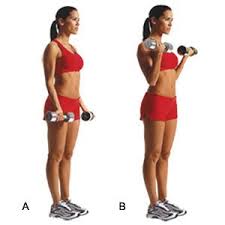
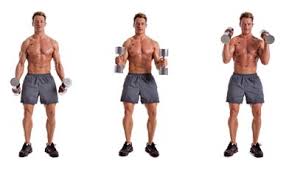
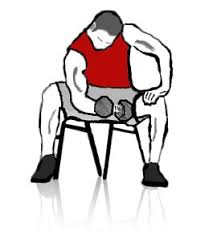
There are several different ways to do a Bicep Curl.
If you think a standing bicep curl is only working your bicep, think again. That is one of the biggest misconceptions about working out that many people are unaware of. The body uses more than 50 different muscles just to stay standing.
Once you decide to put a weight in your hand, whether a barbell or dumbbell, everything changes, and your body exerts even more energy. Isolation of any muscle, in this case the bicep, is a total-body activity. In order to do this exercise properly with super strict-form, it will require you to use almost every single muscle in the body. Remember, just to stay standing requires more 50 different muscles, and now we have added weight to the equation.
Doing a bicep curl with "super-strict form" means standing with a slight bend in your knees and driving your heels into the ground with your head and chest up. You need to keep your abdominals engaged during the entire set in order to maintain proper form and work your abdominal muscles. As you keep your shoulders and elbows back you will begin to contract your triceps, and as you curl the bar up it will contract your biceps. Be sure to maintain the squeeze the whole way up and down the curl. It is better to do one perfect rep than 30 incorrectly. AND don't forget to contract your core (Abs) !!!
1. Standing Bicep Curl - one of the most popular forms. Both arms are raised, palms up at the same time. Focus is on keeping your upper arms close to your sides and "still".
2. Hammer Curls - hits Delts and Biceps
3. Bench Curl - my favorite one !! Total isolation of Bicep. Done on bench, with back of arm resting on inner thigh, arm extends straight down towards floor and then slowly curl back up being sure to keep upper arm "still".

A simple bicep curl will work your abs, gluts, triceps, shoulders and countless other muscles in the body. Like the bicep curl, all exercises require the whole body to work when performed correctly.
The next time you are in a rush at the gym and can't decide where to begin, keep this in mind and remember that you don't need to cram in reps on every single machine to work your entire body.
Let me know how you make out and show me YOUR guns !!!
"Peace, Love and Fitness"
It is always gratifying that my hard work gets noticed for sure....but sometimes people are shocked by the answer I give them ! Biceps are fun to train and respond quickly to training, however if you use different training techniques, you can train more then your biceps during a bicep curl !
Sometimes..you don't have alot of time to train so in order to achieve a "full-body workout" you have to be creative and efficient with your training program.
Most women I train want "guns" (biceps) and the good news is that it IS possible ! And a big misconception is that you will look like the "Hulk" - Chill out - you don't have enough testosterone in your body first of all AND you would have to take supplements or in some cases steroids in order to look like the bodybuilders.
There are several different ways to do a Bicep Curl.
If you think a standing bicep curl is only working your bicep, think again. That is one of the biggest misconceptions about working out that many people are unaware of. The body uses more than 50 different muscles just to stay standing.
Once you decide to put a weight in your hand, whether a barbell or dumbbell, everything changes, and your body exerts even more energy. Isolation of any muscle, in this case the bicep, is a total-body activity. In order to do this exercise properly with super strict-form, it will require you to use almost every single muscle in the body. Remember, just to stay standing requires more 50 different muscles, and now we have added weight to the equation.
Doing a bicep curl with "super-strict form" means standing with a slight bend in your knees and driving your heels into the ground with your head and chest up. You need to keep your abdominals engaged during the entire set in order to maintain proper form and work your abdominal muscles. As you keep your shoulders and elbows back you will begin to contract your triceps, and as you curl the bar up it will contract your biceps. Be sure to maintain the squeeze the whole way up and down the curl. It is better to do one perfect rep than 30 incorrectly. AND don't forget to contract your core (Abs) !!!
1. Standing Bicep Curl - one of the most popular forms. Both arms are raised, palms up at the same time. Focus is on keeping your upper arms close to your sides and "still".
2. Hammer Curls - hits Delts and Biceps
3. Bench Curl - my favorite one !! Total isolation of Bicep. Done on bench, with back of arm resting on inner thigh, arm extends straight down towards floor and then slowly curl back up being sure to keep upper arm "still".
A simple bicep curl will work your abs, gluts, triceps, shoulders and countless other muscles in the body. Like the bicep curl, all exercises require the whole body to work when performed correctly.
The next time you are in a rush at the gym and can't decide where to begin, keep this in mind and remember that you don't need to cram in reps on every single machine to work your entire body.
Let me know how you make out and show me YOUR guns !!!
"Peace, Love and Fitness"
Tuesday, May 29, 2012
Fix your Form - The Perfect Dumbell Row !
For those of you familiar with the dumbell row, it is often done incorrectly. As with any exercise proper form can be the diffrence between success and failure.
The Wrong Way: The single-arm dumbbell row is usually well-performed in terms of the movement itself. What people screw up is their posture. If you look at the picture below you will notice the model's back is rounded.
Rounding the back can make your spine and shoulder vulnerable to injury so you want to make sure it is straight.

The Proper Form: Instead, make sure to keep a straight spine and brace the core (contract your abs). Lift the weight up toward the hip until the upper arm is level with the back. Again, extremely important to NOT lift your elbow higher then your back as that can disengage the triceps and engage the shoulder and back.

Now it's your turn. Evaluate your row form, then try the tips above. Tell me how it goes in the comments below, and be sure to check back over the following weeks for more tips !
"Peace, Love and Fitness"
The Wrong Way: The single-arm dumbbell row is usually well-performed in terms of the movement itself. What people screw up is their posture. If you look at the picture below you will notice the model's back is rounded.
Rounding the back can make your spine and shoulder vulnerable to injury so you want to make sure it is straight.
The Proper Form: Instead, make sure to keep a straight spine and brace the core (contract your abs). Lift the weight up toward the hip until the upper arm is level with the back. Again, extremely important to NOT lift your elbow higher then your back as that can disengage the triceps and engage the shoulder and back.
Now it's your turn. Evaluate your row form, then try the tips above. Tell me how it goes in the comments below, and be sure to check back over the following weeks for more tips !
"Peace, Love and Fitness"
Thursday, May 24, 2012
The Crunch ! Fix Your Form !
If you don't know your way around a weight room, heading to the gym can be intimidating -- and even dangerous.
But paying attention to a few simple rules of proper technique can make you slimmer, stronger and healthier all over.
This week, we're conquering the crunch. Experts agree that crunches are generally not the fastest path to flat abs, - Like I always say....Sixpack Abs are 80% made in the Kitchen !
Most people don't want to eat clean and be diciplined enough.....so they will never be able to see the true benefits of seeing their abs ! (everybody HAS abs, but most are covered up by a layer of fat !)
But we'll examine some other ab exercises in the coming weeks. I still see plenty of people doing crunches -- and doing them wrong.
Poor crunches put the back into an eerily similar position as sitting hunched over in a desk chair! Which is why you should also try to sit on a Swiss Ball 20 minutes a day at your desk !

The Fix: Instead of trying to bring the shoulders to the knees, think about bringing them straight up towards the ceiling. This will engage the abs without compromising the spine.
Lift toward the ceiling until your shoulder blades clear the ground, then slowly lower your torso back down. Just looking at this picture - you can almost SEE the abs doing the work ! When you practice this form below....you WILL feel the abs engage....that's how you know you have the correct form !

Now it's your turn. Evaluate your crunch form, then try the tips above. Tell me how it goes in the comments below, and be sure to check back over the following weeks to fix your squats, planks and more !
Peace, Love and Ftiness !
Tuesday, May 15, 2012
Fix Your Form - How to Do the Perfect Lunge !
If you don't know your way around a weight room, heading to the gym can be intimidating -- and even dangerous. It is worth asking for some machine instruction from a trainer at your gym. A good gym should have someone available at all times to assist with proper form whether it's on a machine or at free-weight area. That's why Snap-Fitness is not a wise idea - as there does not have to be anyone at the facility as it is opened by card pass only !
But paying attention to a few simple rules of proper technique can make you slimmer, stronger and healthier all over.
This week, let's look at The Lunge. Most women I know do this exercise.
The Faux Pas: The number one mistake here is that people look down at their feet, and, where the head goes, the body follows.
It's over-exaggerated in the photo below but you can see that by looking down at your feet, you force your body to 'round' unnaturally downward, which can throw you off balance or place unwanted stress on your joints.

The Fix:
Make sure you look straight ahead, keep your shoulders back and spine straight.

Frequently finding yourself glancing down to gauge where to place your forward foot?
Rather than worrying about foot placement, lunge forward a distance that simply feels natural.
As well....you MUST be careful not to "move over your knee" when you lower into the squat. What this means is keep a straight back and make sure your knee is NOT over your lead foot, thereby putting less strain on your knee.
As you get more comfortable with your lunges, you can also incorporate dumbbells as well and challenge your balance. Begin with light weights - 5 - 8lbs until you are comfortable.
Now it's your turn !
Evaluate your lunge form, then try the tips above. Tell me how it goes in the comments below, and be sure to check back over the following weeks to fix your squats, planks, crunches and more.
But paying attention to a few simple rules of proper technique can make you slimmer, stronger and healthier all over.
This week, let's look at The Lunge. Most women I know do this exercise.
The Faux Pas: The number one mistake here is that people look down at their feet, and, where the head goes, the body follows.
It's over-exaggerated in the photo below but you can see that by looking down at your feet, you force your body to 'round' unnaturally downward, which can throw you off balance or place unwanted stress on your joints.
The Fix:
Make sure you look straight ahead, keep your shoulders back and spine straight.
Frequently finding yourself glancing down to gauge where to place your forward foot?
Rather than worrying about foot placement, lunge forward a distance that simply feels natural.
As well....you MUST be careful not to "move over your knee" when you lower into the squat. What this means is keep a straight back and make sure your knee is NOT over your lead foot, thereby putting less strain on your knee.
As you get more comfortable with your lunges, you can also incorporate dumbbells as well and challenge your balance. Begin with light weights - 5 - 8lbs until you are comfortable.
Now it's your turn !
Evaluate your lunge form, then try the tips above. Tell me how it goes in the comments below, and be sure to check back over the following weeks to fix your squats, planks, crunches and more.
Friday, April 13, 2012
An Apple a Day ! Here's Why ! Crowding Out ! ?
Here's the secret to weight loss: It's all about crowding out, not cutting out. Crowding out is a term used in nutritional circles to describe how to eat in a healthy way so that you never even have the chance to feel hungry.
You literally crowd out the junk you think you want to eat by choosing to eat key foods throughout the day so that you're always satisfied. I am always teased about carrying around my "Fred Flinstone" lunch bag around all the time but hey ! I know the secret !!!!
When you gradually add in nutrient-dense, fiber-rich foods, you simply stop feeling cravings. You run out of space in your belly for the old junk. Instead of craving, you feel full, fulfilled, and content. You DON'T NEED expensive friggin' pills and fad powder diets !!! Just eat healthy and eat 6 - 7 times daily - small portions !
Here's how it works: All you have to do to get started is to add healthier choices to whatever else you're already eating. Before you dig into whatever it is you really want to eat, have something with some natural fiber in it -- ideally, an apple -- because in all the medical literature, the one dietary component most associated with weight loss is fiber consumption. The reason fiber helps us control our weight is that it fills the belly yet yields few calories since fiber is, for the most part, not something that we can digest. It also slows down the digestion of food, so you get a slow and steady source of glucose sans the rollercoaster ride of blood sugar crazies and the cravings that follow.
Most of the population do not get enough fiber each day to meet their nutritional requirements. It's recommended that women get at least 25 grams of fiber per day on a 2,000 calorie diet -- or to be more precise, 14 grams of fiber per 1,000 calories consumed. Men are recommended to get 38 grams. However, the average person only gets about 15 grams daily. Twenty-five grams is actually at the low end of what your optimal fiber intake, so there's no reason not to aim higher. We humans actually evolved eating more than 100 grams of fiber a day, largely from wild greens. So back to that apple: How does an apple measure up in terms of fiber? Eating just one apple a day (skin on) will give you an average of 4.4 grams of fiber, about one-fifth of your daily need.
And apples don't have just any old fiber, they are a rich source of a particularly powerful kind called pectin. It's what's used as a gelling agent to make jams and jellies, and in our stomach it can delay stomach emptying through a similar mechanism. Researchers at UCLA showed that by swapping in pectin for regular fiber, they could double the time it took subjects' stomachs to empty from about 1 hour to 2 hours, which meant subjects felt full that much longer.[1] And in another study published in the journal Nutrition, scientists found that instructing participants to eat an apple or a pear before meals resulted in significant weight loss.[2]
The participants were told, in effect, to eat more food, to add the fruit on top of their regular diets, and what happened is that the fruit crowded out less healthy choices, they ended up eating fewer calories overall, and they started shedding pounds.
While singing the praises of the humble apple, though, I would be remiss not to mention the extraordinary health benefits associated with eating them. It seems the old adage, "an apple a day keeps the doctor away" just may hold truer than we knew.
A major review published in 2008 out of the German Cancer Research Center found that indeed, compared with those who eat less than an apple a day, those who eat one or more had less risk of oral cancer, cancer of the voice box, breast cancer, and colon, kidney, and ovarian cancer as well.
This makes sense given new research from Cornell showing that apple peels have potent antioxidant and growth-blocking effects on human breast cancer cells examined in a petri dish, and the higher the apple concentration, the fewer the cancer cells. And apples seem to work best against estrogen-receptor-negative breast cancer, which is much harder to treat than the receptor-positive kind.
How do apples do what they do?
There are three stages of tumor formation. Carcinogens cause the initial DNA mutations (the initiation stage), and then oxidation, inflammation, and hormones cause it to grow (the promotion stage); finally, metastasis occurs, in which the cancer spreads throughout the body. Which steps have apples been found to block? All of them. Apples not only have antimutagenic, antioxidant, and anti-inflammatory effects, but they may even enhance our immune systems to help clear out any budding tumors before they get their start.
So if you're rooting around for something to eat, grab an apple while you're looking, and usually by the time you're finished eating it, your hunger will have been sidelined; it's crowding out at its best! Have it in the midmorning, in the afternoon, or before a meal; it's entirely up to you. But before the day's end, do eat an apple. Not apple juice or applesauce (and certainly not apple pie or an apple muffin!).
Just a good ol' whole apple. Any kind will do. You might just be pleasantly surprised at how the weight starts coming off and your health begins to soar!
"Inspire, Create, Motivate"
You literally crowd out the junk you think you want to eat by choosing to eat key foods throughout the day so that you're always satisfied. I am always teased about carrying around my "Fred Flinstone" lunch bag around all the time but hey ! I know the secret !!!!
When you gradually add in nutrient-dense, fiber-rich foods, you simply stop feeling cravings. You run out of space in your belly for the old junk. Instead of craving, you feel full, fulfilled, and content. You DON'T NEED expensive friggin' pills and fad powder diets !!! Just eat healthy and eat 6 - 7 times daily - small portions !
Here's how it works: All you have to do to get started is to add healthier choices to whatever else you're already eating. Before you dig into whatever it is you really want to eat, have something with some natural fiber in it -- ideally, an apple -- because in all the medical literature, the one dietary component most associated with weight loss is fiber consumption. The reason fiber helps us control our weight is that it fills the belly yet yields few calories since fiber is, for the most part, not something that we can digest. It also slows down the digestion of food, so you get a slow and steady source of glucose sans the rollercoaster ride of blood sugar crazies and the cravings that follow.
Most of the population do not get enough fiber each day to meet their nutritional requirements. It's recommended that women get at least 25 grams of fiber per day on a 2,000 calorie diet -- or to be more precise, 14 grams of fiber per 1,000 calories consumed. Men are recommended to get 38 grams. However, the average person only gets about 15 grams daily. Twenty-five grams is actually at the low end of what your optimal fiber intake, so there's no reason not to aim higher. We humans actually evolved eating more than 100 grams of fiber a day, largely from wild greens. So back to that apple: How does an apple measure up in terms of fiber? Eating just one apple a day (skin on) will give you an average of 4.4 grams of fiber, about one-fifth of your daily need.
And apples don't have just any old fiber, they are a rich source of a particularly powerful kind called pectin. It's what's used as a gelling agent to make jams and jellies, and in our stomach it can delay stomach emptying through a similar mechanism. Researchers at UCLA showed that by swapping in pectin for regular fiber, they could double the time it took subjects' stomachs to empty from about 1 hour to 2 hours, which meant subjects felt full that much longer.[1] And in another study published in the journal Nutrition, scientists found that instructing participants to eat an apple or a pear before meals resulted in significant weight loss.[2]
The participants were told, in effect, to eat more food, to add the fruit on top of their regular diets, and what happened is that the fruit crowded out less healthy choices, they ended up eating fewer calories overall, and they started shedding pounds.
While singing the praises of the humble apple, though, I would be remiss not to mention the extraordinary health benefits associated with eating them. It seems the old adage, "an apple a day keeps the doctor away" just may hold truer than we knew.
A major review published in 2008 out of the German Cancer Research Center found that indeed, compared with those who eat less than an apple a day, those who eat one or more had less risk of oral cancer, cancer of the voice box, breast cancer, and colon, kidney, and ovarian cancer as well.
This makes sense given new research from Cornell showing that apple peels have potent antioxidant and growth-blocking effects on human breast cancer cells examined in a petri dish, and the higher the apple concentration, the fewer the cancer cells. And apples seem to work best against estrogen-receptor-negative breast cancer, which is much harder to treat than the receptor-positive kind.
How do apples do what they do?
There are three stages of tumor formation. Carcinogens cause the initial DNA mutations (the initiation stage), and then oxidation, inflammation, and hormones cause it to grow (the promotion stage); finally, metastasis occurs, in which the cancer spreads throughout the body. Which steps have apples been found to block? All of them. Apples not only have antimutagenic, antioxidant, and anti-inflammatory effects, but they may even enhance our immune systems to help clear out any budding tumors before they get their start.
So if you're rooting around for something to eat, grab an apple while you're looking, and usually by the time you're finished eating it, your hunger will have been sidelined; it's crowding out at its best! Have it in the midmorning, in the afternoon, or before a meal; it's entirely up to you. But before the day's end, do eat an apple. Not apple juice or applesauce (and certainly not apple pie or an apple muffin!).
Just a good ol' whole apple. Any kind will do. You might just be pleasantly surprised at how the weight starts coming off and your health begins to soar!
"Inspire, Create, Motivate"
Subscribe to:
Posts (Atom)
BUSINESS CARD
